Marian Lamoureux of Hinsdale | The Quitting Point Most Piano Students Hit Around Month Eighteen
Marian Lamoureux Hinsdale
Most kids who quit piano do not quit because they hate music. They quit somewhere around the eighteen-month mark, after the easy reward of the beginner book runs out and before the second-year pieces start to feel like real music.
Marian Lamoureux of Hinsdale has watched this same pattern repeat across more than four decades and hundreds of students, in Ontario and now in Illinois. The shape of it is so consistent that she can usually see it coming weeks in advance.
What kills piano study at month eighteen is not the difficulty of the music. It is the moment a student begins to suspect they are not naturally good at it. Practice slows down. Excuses start.
Lessons begin to feel like a chore for everyone involved. The student stops volunteering at the bench. The parent starts asking whether the kid should keep going.
Pushing harder is the wrong response
Most teachers, and most parents, respond to a slipping student by adding pressure. More practice time. Another book. A competition deadline.
Lamoureux thinks that approach is almost always backward. She does the opposite. She slows down.
She picks a piece the student actually wants to play, even if it is below their technical level. She returns them to a song they already know and adds a new layer to it, like a dynamic shape or a small ornament. The goal is to put a small win back in their hands while the bigger work catches up.
The repertoire question matters more than the practice question
Parents tend to ask whether their child is practicing enough. Marian asks whether their child is practicing the right thing. A teenager dragged through a Czerny exercise will get less out of forty minutes than they would from fifteen minutes on a piece they chose.
This is not about handing students whatever they ask for. It is about reading what they need.
A nine-year-old who loves dramatic music gets a piece with weight. A twelve-year-old who lives on pop radio gets a careful piano arrangement of something on the radio. Lamoureux has done this through every era of popular music she has taught through, and she has been teaching since 1975.
What the second-year shift actually looks like
For the students who make it past the quitting point, the change is usually quiet. They start practicing without being asked.
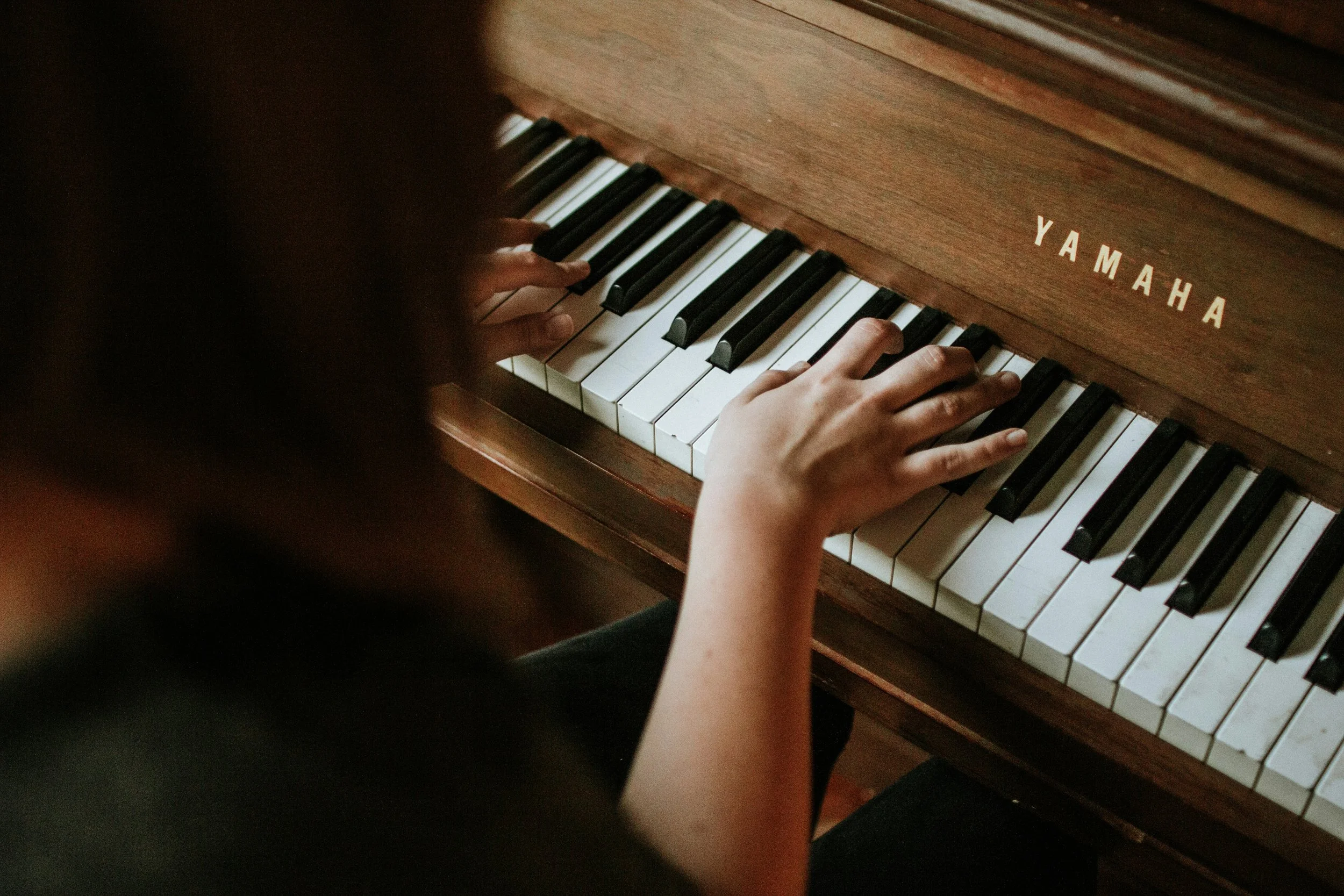
They sit at the piano in the middle of an afternoon for no clear reason, working out something they want to figure out for themselves. That moment, when the student sits down without prompting, is the one Marian is working toward.
Not a competition trophy. Not a test result. Not even a recital that goes well. Just a kid who keeps coming back to the bench on their own.
The Royal Conservatory of Music exam scores tend to follow that habit, not the other way around. The student who plays daily because they want to almost always tests well when the time comes.
Catching the slip in the right week
The students who stay with piano past month eighteen are not always the most talented at the start. They are often the ones whose teacher noticed them slipping in the right week and made a change.
Sometimes the change is a new piece. Sometimes it is a conversation. Sometimes it is a long pause and a different question.
Marian believes that students learn best when the music speaks to them personally. The role of the teacher, in her telling, is not to drag a student forward.
It is to listen carefully enough to know what to set in front of them next. There is no clever trick that keeps a kid at the piano for ten years.
There is only attention paid in the right week, and a teacher willing to change course when the student needs them to. The students who stay are usually the ones whose teacher caught them in time.